Number of people smoking in the North East reaches record low
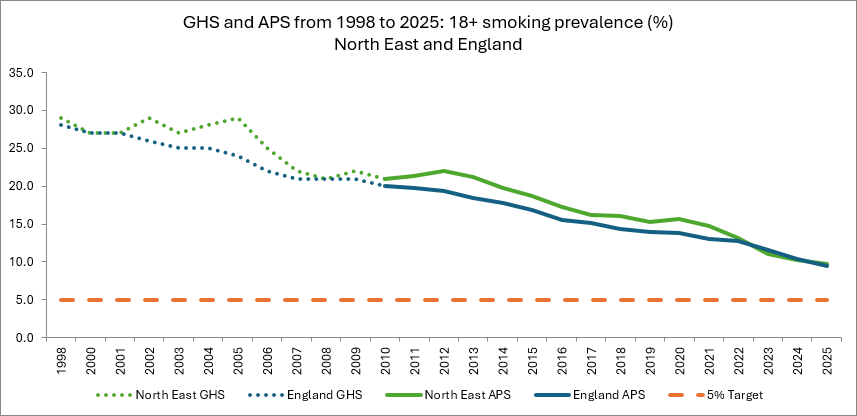
New figures show adult smoking rates in the North East have had another fall, marking another significant milestone in the region’s progress towards a smokefree future. Just 9.7% of adults now smoke, with the North East recording the largest overall decline in smoking prevalence of any region in England since 2005 – the result of two decades of sustained focus, investment and collaboration.
The latest Annual Population Survey from the Office for National Statistics shows 9.7% of adults in the North East smoke, down from 10.2% in 2024. This compares with 9.5% of adults nationally in England.
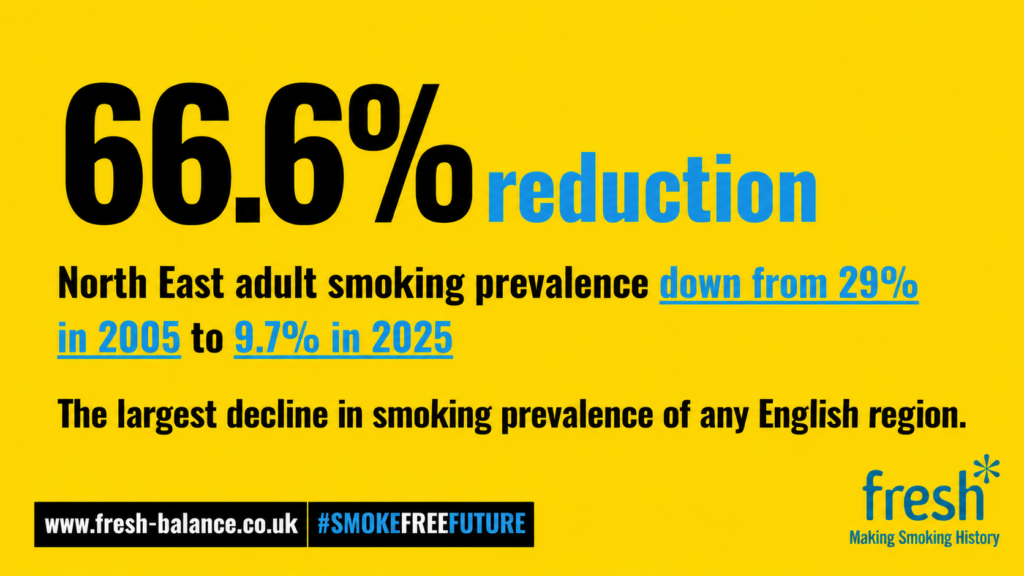
The North East has seen the largest reduction in adult smoking of any English region since 2005, when 29% of adults in the region smoked – then the highest rate in the country. Smoking prevalence has since fallen by 66.6%, a reduction of around two-thirds over two decades.
In additional figures also show:
- 9.8% of adults now smoking across the North East and North Cumbria NHS Integrated Care Board area.
- The North East also now has the lowest smoking prevalence among adults in routine and manual occupations of any English region, at 18%, compared with the England average of 19.5. However, this still highlights the massive health inequalities in smoking and the need to support millions more adults to quit.
- These further falls in smoking also come on the back of the lowest rates of smoking during pregnancy ever recorded for the North East and North Cumbria at 5%, compared with 13.1% in 2020/21 – a reduction of more than 61%.
The North East has a Declaration for a Smokefree Future to end the death and disease caused by tobacco, supported by Fresh, all local authorities and local Hospital Trusts and the North East and North Cumbria NHS Integrated Care Board. This would improve the health and wealth of our region’s most disadvantaged communities more than any other measure.
January 1 2027 also sees the implementation of the Smokefree Generation law in the Tobacco and Vapes Act to ensure that anyone born on or after 1st January 2009 can never legally be sold lethal tobacco products. This is expected to protect up to 4 million young people in the next five years. It could also support another two million adults if more people who currently smoke are also helped with support to quit.
Ailsa Rutter OBE, Director of Fresh and Balance, said: “Back in the late 90s and early noughties, some thought it unthinkable that we would see smoking rates fall to below 10% in the North East. But when Fresh launched in 2005, we had a bold ambition that we would make smoking history and that we could achieve a major shift in the social norms around smoking. We knew how vital that this was and since then smoking in our region has now fallen by around two-thirds – the largest reduction of any region in England.
“This latest reduction shows the real and lasting impact of keeping a consistent focus on our biggest cause of preventable death. By local authorities, the NHS, charities and key national partners such as the Department of Health and Social Care working together with Fresh we are demonstrating that things can change and this collaborative approach is paying off.
“We have also focussed efforts to target health inequalities and it is encouraging that the North East has the lowest smoking rate among people in routine and manual occupations, alongside record-low annual rates of smoking at the time of delivery. But there is still much more to do and no room for complacency as we recognise that rates are much higher in some communities and within some groups. The tobacco companies themselves will remain focussed on finding replacement new customers and keeping people hooked on a lifetime of addiction.
“We know most people who smoke regret starting. would like to be able to quit, and most have tried. We need to ensure everyone has access to effective quitting support and encouragement to give quitting a go, because it is never too late to stop. The good news is that there has never been as many ways to quit smoking”
But she added: “While the long-term decline is reason to be proud, these figures do not tell the whole story and are one data source and it is recognised that the Annual Population Survey misses out some groups so are likely to be an underestimate. It is vital that our ambition for a smokefree future where nobody is left behind, becomes a reality as soon as possible and that means supporting people who face the greatest barriers to quitting.
“Smoking is still driving 16 kinds of cancer, cardiovascular disease and COPD, adding pressure to the NHS, social care and our economy. We need sustained, combined action to prevent people from starting and to help more people who smoke to stop. The Tobacco and Vapes Act is a major step towards making smoking history for future generations, but there is much more to do. We will continue to need combined action to deliver a smokefree future, helping people who smoke now to quit and ensuring no community is left behind.”